Middle class hypocrisy -- pay happily for luxuries, and shout only when vegetable prices go up.


Whenever vegetable prices go up, the middle class is up in arms. But how come they don't mind spending anything for buying flats, gold/silver, car, and other luxuries -- ft.com picture

At the outset let me first acknowledge that I don't see any valid reason for the stupendous rise in vegetable prices that we are witnessing for the past few days. As i have always maintained that the kind of price rise that we have seen in the past several years, which incidentally is the only time when we feel and talk of inflation, has nothing to do with supply demand constraints. Its simply linked to hoarding and profiteering. I have more than once stated publicly that unless the Government gets tough on the retail trade, it is difficult to bring control over runaway inflation that inches one and all.

Having said that, what I find it intriguing is that it is only when the vegetable/fruit prices start showing an upward trend that the media wakes up. It is only then that I find the middle class complaining. Suddenly the ladies who appear on the TV start telling us how difficult it has now become to manage their household in the monthly budget. This makes me ask: Is fruit/vegetable prices the only thing that decides the household budget? Why do the same people remain conspicuously quiet when the price of gold, for instance, jumps from Rs 12000/10 grams to Rs 30,000 and above. Does it not affect their household budgets? What about those who have to get their children married? Don't they feel the pinch of the quantum jump in the price of gold/silver?

It is roti, kapda and makaan that every one looks forward to. Over the past few years, the price of residential flats in every nook and corner of the country has literally gone through the roof. Planning Commission had once blamed the real estate for the 400 per cent increase in reality prices. If you are an average middle class person, I bet it is not possible for you to even think of owning a house or a flat in any city. Thinking of buying land, then you must be really rich. News reports tell us that a cent of land in Mumbai is now more expensive than Tokyo or New York. is that not the kind of inflation that affects the middle class? Then how come every one is quiet.

Instead of screaming at the top of their voice, I find the newspapers and the electronic media actually celebrating the massive rise in land and housing prices by bringing out weekly supplements. Just because any hike in real estate prices brings additional revenue for the newspapers and TV channels, is it fair to remain quiet and not draw the attention of the Government? But just because we remain a silent spectator to the spiralling prices, media benefits. In fact, this makes me wonder. If the vegetable hawkers (or through their associations) were to start advertising in newspapers probably you will never watch any TV programmes on inflation if and when the prices shoot up.

Not only gold and silver, the prices of almost everything that concerns us has been on an upswing. Whether it is your child's education, or your daughters college fees. Whether it is your train ticket or the air fare. Airlines have recently added on to your costs by unbundled prices like seat preference for instance. Taxi fares have been going up. It is more expensive to travel from my house to the airport or railway train station than to take a Volvo air-conditioned bus from Chandigarh to New Delhi. Petrol and diesel prices have been routinely increasing, even privatisation of electricity delivery has made power bills soar for an average family. And so on...

Isn't this all part of inflation that pinches us? Isn't this also responsible for upsetting our household budgets? Then why is that we never complain about anything except vegetable prices? Why is that media never talks about this? Well, because in some way, we all believe that the rise in prices of everything else except for vegetables/food constitutes economic growth. Just because we have surplus cash it is alright to spend. The more the expensive gadgets/services, the better we feel. But when the ostensibly poor people start charging us more, we start screaming. Our budget only goes for a toss when the tomato prices go up to Rs 80/kg or Onion prices increase to Rs 60/kg. But when a 2-bedroom flat in the outskirt of Delhi costs anything upwards of Rs 1.5 crore, we rejoice. We don't even get tired telling anybody and everybody around us the price we have paid for that flat. How come we are ready to pay crores for a flat (which surely is a superfluous price) and only crib when vegetable prices shoot up?

Isn't this middle class hypocrisy?

Food Security bill: Why it is an opportunity lost

Several years ago I and Dr M S Swaminathan were speaking at a conference on hunger at Rome. Also speaking at one of the session was the Brazilian Minister for Zero Hunger Programme, the dream programme of ex-President LuizInácio Lula da Silva. After he had listened to us, he sat down with us to know of how India was battling hunger, specially the way India was managing its food self-sufficiency and the massive food procurement programme.

It was therefore so heartening to read a news report saying No hunger in Brazil by 2015. This only shows the ability of the Brazilian leadership to learn from others, and draw up a programme to fight hunger based on the central premise: supporting family farms – which currently provide 70 percent of the food eaten by Brazilians. The entire programme to fight hunger was designed on the basis of what the country required. 

Ever since Brazil launched the Zero Hunger programme in 2001, it has pulled out 30-40 million people from poverty. While Brazil promises to remove hunger by 2015, there is no such clarity and promise being doled out under the ambitious National Food Security bill in India. To me it seems that while Brazil's Zero Hunger was time-bound and aimed at making hunger history, India's food security bill is simply targeted at the 2014 elections, and is for posterity.

India's proposed food security bill therefore is a lost opportunity. Sonia Gandhi did provide a historic opportunity for the National Advisory Council (NAC) to come up with a proposal to fight hunger in such a meaningful way that makes hunger history. But the opportunity was squandered. I would have been keenly looking for a policy programme which could have spelled out how much hunger would go away in the next five years, in the next 10 years, in the next 15 years and so on. The proposed law could have been easily designed in a manner that aims to remove hunger once for all rather than keep the majority population dependent on food doles for all times to come. An economically viable and sustainable agriculture should have been at the centre of the food security programme. With nearly 2,500 farmers quitting agriculture every day, and nowhere to go, the scourge of hunger is only going to multiply.

The United Nations meanwhile has complimented 38 countries, including Brazil, for beating a UN deadline of 2015 to remove half their hunger. It was in the year 2000 when the UN established the Millennium Development Goals for countries, the first target being to reduce extreme poverty and hunger by half by the year 2015. These 38 countries are: Algeria, Angola, Armenia, Azerbaijan, Bangladesh, Benin, Brazil, Cambodia, Cameroon, Chile, Cuba, Djibouti, Dominican Republic, Fiji, Georgia, Ghana, Guyana, Honduras, Indonesia, Jordan, Kuwait, Kyrgyzstan, Malawi, Maldives, Nicaragua, Niger, Nigeria, Panama, Peru, St. Vincent and the Grenadines, Samoa, Sao Tome and Principe, Thailand, Togo, Turkmenistan, Uruguay, Venezuela and Vietnam.

While I agree that 91 per cent reduction in global hunger since 1991-92 has come from the efforts made by just two countries – China and Vietnam, it is significant that some other countries are fast racing to eradicate hunger. Even if these countries have relatively smaller populations (except Indonesia and Bangladesh) hunger is a scourge that blots development everywhere including tiny nations. A hungry nation can never be economically strong howsoever it may try to paint a rosy picture based on statistical jugglery.

The proposed National Food Security bill therefore was an excellent opportunity to plan a time-bound programme – that cuts into several related ministries. Besides agriculture, rural development, science& technology, the law should have also corrected many distortions coming through international trade, industry and land acquisitions.

Take the case of the dairy sector. It is generally believed that most farmers who have not committed suicide are the ones who are also keeping dairy animals. But under the proposed Indo-European Union Free Trade Agreement (FTA) that is about to be signed, India has agreed to drastically reduce the import duties on the import of milk and dairy products. This will bring in a flood of cheaper imports which the European Union is saddled with. These highly subsidised imports will hit not only the cooperative dairy sector but also render small farmers uneconomical. 

When Nature strikes back, does it leave behind some harsh lessons? Yes, but who wants to listen??


Thousands of people stranded in Uttarakhand being guided to safety 

When I was in the college I remember watching a film about angry birds and animals. It was not a suspense/horror film nor an animation but depicted what can happen some day when angry birds hit back. After all, how long can the birds (and animals) take it lying down? How long will they continue to suffer and tolerate all the torture that mankind has been inflicting upon them with utmost ease?

I don't think we took it seriously.

Last week's disaster that struck the Himalayan region of Uttarakhand in India -- some call it the Himalayan 'tsunami' -- left thousands missing and several times over stranded when nature hit back in all its fury. Within minutes, several parts of Uttarakhand were left devastated. Till the time of writing this, the rescue operations were on, and reports said the death toll may be in multiple of thousands. Swathes of metalled roads had been washed away, massive landslides taking place all along, a large number of villages swept away from the face of the earth leaving behind almost 10-12 ft of accumulated silt. Reports talked of dogs and vultures feeding on the dead bodies. You have all read it. I don't want to re-write those horrific stories of what appears to be clearly a man-made disaster.

It is not that warnings had not been sounded earlier. But a political class -- along with a dominant section of Indian media -- were so swayed by the magic of economic growth that they went on hammering on the need to bring in more investments into the Himalayan region. Any move by saner voices to raise the issue of environmental consequences of lop-sided development were run down as obstacles to growth. Not only for Uttarakhand, they also heckled down a miniscule of TV panelists who would talk of balancing growth with environment. So when Prime Minister Manmohan Singh decided to override Ministry of Environment & Forests right to view environmental cost of financial investments being made in the country, he set up the National Investment Board. The TV channels had backed the wrong move saying that it was required for country's development. I am sure when a disaster strikes these projects, for which fast-track investment clearances are now being made, the same media will never question its own nefarious role.

Policy paralysis is another term that has been coined to explain the obstacles been thrown at industrial growth in the name of environment protection. Investment worth thousands of crores was struck because environmental clearance was not coming. In fact, many a time idiotic questions like why do we need environmental clearance were being also asked. The same media -- perhaps to overcome its own guilt -- is now shrieking and shouting asking why the politicians ignored the warnings on the environment front. The same experts, who kept quiet all these years, are being invited to explain how and why environment protection was ignored. But the bigger question is -- what were they doing when the Himalayas were being ruthlessly raped by the mining, timber and construction mafia?

It is all because not only the political leaders and the mafias, we, the people, too are at fault. We have always preferred to remain a mute spectator when ecological devastation is underway. Not many of us dare to step out, and do whatever he/she can do. While the local communities have been on the forefront of raising their voice, its the educated and the elite who try to run down the ecocide saying its a collateral damage and is inevitable. Even those in public limelight, more often than not, remain quiet hoping that their opposition would block their own chances of being on a State or Central committee. Sad but true of the ways the educated are part of the compromise. By keeping quiet, we only lend support to the mafias.

So when Prime Minister Manmohan Singh approved the Amritsar-Kolkata industrial corridor along the Grand Trunk Road, no questions were asked. earlier, all opposition to the New Delhi-Mumbai industrial corridor had been brushed aside. All environmental norms and the resulting socio-economic cost of a faulty development model were simply ignored. I am illustrating with these two examples to show that the probable damage that can happen is not confined to the Himalayas. It can also happen in these very industrial corridors. Does anyone care? When was the last time you saw Indian TV channels asking the right questions about the completely flawed and environmentally catastrophic industrial growth model that is being aggressively pushed?

Nature has its own ways. It can tolerate to an extent the havoc that is being played around. But when you stretch the extremes, it has its ways of striking back. Uttarakhand just witnessed the nature's backlash. But will we draw any lessons? I seriously doubt. After the relief is operations are over, the weather returning back to normal, and when another match fixing scandal breaks out, the great Himalayan tragedy will be all but forgotten. We will once again return back to our wayward ways of exploiting the hills, make our money and leave the poor hapless millions to face the fury of nature whenever it decides to strike back. Till then we can continue to bask and soak in the glory of rising GDP numbers.

For those who have forgotten the massive destruction Tsunami caused along the coast of South India, here is what I wrote at that time: Tsunami, mangroves and Market Economy (http://www.inmotionmagazine.com/opin/devsh_tsunami.html)  Although this essay was reproduced/printed very widely across the globe, I don't know whether we got the message right. With the passage of time, we will also forget the underlying message from the great Himalayan Tragedy. We have always refused to learn from our past mistakes.

Instead of making hunger history, India's Food Security bill is for posterity.


Will India's proposed Food Security bill ever put an end to such queues for food?  

Several years ago I and Dr M S Swaminathan were speaking at a conference on hunger at Rome. Also speaking at one of the session was the Brazilian Minister for Zero Hunger Programme, the dream programme of ex-President Luiz Inácio Lula da Silva. After he had listened to us, he sat down with us to know of how India was battling hunger, specially the way India was managing its food self-sufficiency and the massive food procurement programme.

Yesterday, when I read the news report No hunger in Brazil by 2015 (IPS, June 19, 2013 http://www.ipsnews.net/2013/06/no-hunger-in-brazil-by-2015/) I was reminded of the ability of the Brazilian leadership to learn from others, and draw up a programme to fight hunger based on the central premise:  supporting family farms – which currently provide 70 percent of the food eaten by Brazilians – is central to poverty alleviation.

It is really heartening to know that ever since Brazil launched the Zero Hunger programme in 2001, it has pulled out 30-40 million people from poverty. While Brazil promises to remove hunger by 2015, there is no such clarity and promise being doled out under the ambitious National Food Security bill in India. To me it seems that while Brazil's Zero Hunger was time-bound and aimed at making hunger history, India's food security bill is simply targetted at the 2014 and 2019 elections, and is there for posterity.

India's proposed food security bill therefore is a lost opportunity. Sonia Gandhi did provide a historic opportunity for the National Advisory Council (NAC) to come up with a proposal to fight hunger in such a meaningful way that makes hunger history. But the opportunity was squandered. I would have been keenly looking for a policy programme which could have spelled out how much hunger would go away in the next five years, in the next 10 years, in the next 15 years and so on. The proposed law could have been easily designed in a manner that aims to remove hunger once for all rather than keep the majority population dependent on food doles for all times to come. An economically viable and sustainable agriculture should have been at the centre of the food security programme. With nearly 2,500 farmers quitting agriculture every day, and nowhere to go, the scourge of hunger is only going to multiply.

Meanwhile, I find a lot of excitement among the educated elite over the possibility of launching cash transfers for food. While I have already spelled out how cash transfers will hot at the very foundations of agriculture and food self-sufficiency, news reports of US Senate crackdown on the abuse of food stamps programme is quite unnerving. Just to quote from one news report: "The hearings follow last month's shocking audit by Bump's office showing millions in welfare benefits going to more than 1,100 dead people. Linsky's committee is also investigating the $ 100,000 in welfare benefits given to the family of marathon bomber Tamerian Tsarnaev. The farm bill, passed 66-27 by the US Senate last week, also calls for blocking college students from collecting SNAP benefits if their families are not considered low income; targeting retailers who traffic in EBT cards and forbidding liquor stores ad tobacco shops from accepting food stamps." (Food stamps and the lottery, http://foxmuldar-conservative-thinker.blogspot.in/2013/06/food-stamps-and-lottery.html).

David Cameron's formula to boost UK's falling GDP. Promote GM crops in the name of fighting hunger.


British Prime Minister David Cameron speaking at a pre-G8 event in London. He gave clear hints at the need to embrace GM crops. (Photo: courtesy EPA)

It may startle you. But the fact is that the more you destroy the environment (and the planet) the higher is the economic growth. You can bomb a city, and then rebuild it. The GDP soars. Similarly, if you allow the biotechnology companies to contaminate your food and environment, the health costs go up and so does the GDP. The more the spread of superweeds and superbugs, the more is the application of all kinds of deadly pesticides resulting in a higher GDP growth. And so on.

So when I read today in The Telegraph the British Prime Minister David Cameron openly welcoming the GM industry, stating: "I think there are a number of subjects there that we need to take on, I think it is time to look again at the whole issue of GM foods. We need to be open to arguments from science," I wasn't the least surprised. With the Paris-based Organisation for Economic Cooperation and Development (OECD) predicting that the UK economy will grow by a paltry 1.5 per cent in 2014, David Cameron is certainly bitten by desperation. He wouldn't like to go down as the Prime Minister who failed to prop up the ailing British economy.

We know that extra-ordinary times require extra-ordinary decisions. That holds true for Statesman. But at a time when most political leaders across the globe are no better than corporate lobbyists (Read my earlier analysis: What do you do when Heads of State indulge in lobbying? http://devinder-sharma.blogspot.in/2012/12/the-line-between-lobbying-and-bribery.html) the best they can do is to cling on to desperation. That's exactly what David Cameron has done.

Forgetting the scourge of mad cow disease and the foot-and-mouth disease that resulted in millions of cows being burnt, I wonder whether David Cameron even remotely understands the grave threat GM crops and foods pose to human health and the environment. And this brings me to the central question. If it is not proper for the governments to do what the business can do, why the Heads of State be allowed to do what Corporate lobbyists do? How long can democratic societies keep quiet while the Heads of State unabashedly promote the business interests of Corporations? When will the society stand up to put a curb on the abuse of power by the elected governments?

I see the argument. "Last year farmers lost 1.3 billion pound Sterling from poor harvests and higher feed bills for cattle, making the need for new technology even more urgent," said The Telegraph report. While this may be true, the fact remains the poor harvests that were recorded across some of the developed countries were essentially because of the climatic changes, which is the outcome of the faulty agriculture practices that have been followed over the past few decades. Its intensive agriculture that UK excels in that is causing the problem. Any sensible Head of the State would have first tried to resurrect farming in a manner that it becomes truly sustainable and thereby results in less damage to the environment.

David Cameron was speaking on Beating Hunger through Business and Science at a pre-G8 event in London (see the picture above). Business and science can definitely do a lot to defeat hunger. With over 40 per cent of the processed food being wasted in UK alone, I had thought the Prime Minister would direct the agri-business industry to ensure that not an ounce of processed food goes waste. This measure alone would have drastically reduced the carbon footprint, saved British environment from further deterioration as a result of more intensive farming, and at the same time made billions of pounds of food available to meet the needs of the hungry millions.

Instead he took the desperate route that would result in a higher GDP which he can drum around. The more the business and industry were to invest in developing risky and unwanted GM crops, the more will be the GDP. The more the sale of GM crop seeds, plus the increase in sales of chemicals to fight pests and diseases, the more will be the addition to British GDP. The more the resulting damage to the health of British people would mean more dependence on big pharma, which in turn would mean more spending on health. All this adds on to country's GDP growth.

What a remarkable growth formula, isn't it? #

Additional reading: The Business of Hunger by Devinder Sharma.
http://www.zcommunications.org/the-business-of-hunger-by-devinder-sharma

When superweeds and superbugs will prevail

From poisoned soils and excessively mined undergroundwater, modern agriculture is fast moving to create an ecologically disastrous landscape where superweeds and superbugs will dominate. Sooner than expected, you will find that combating the newly evolving dreaded superpests -- weeds, insects and micro-organisms -- will become a major industry.

Ever since insect resistance was first reported by A L Melander in 1914, studies have shown that more than 500 species of insects, moths and spiders have developed resistance to a pesticide. Some pests have developed multiple resistance to a series of pesticides. Colarado potato beetle for instance is known to be resistant to 52 different compounds belonging to all major pesticides classes, says a paper published in the American Journal of Potato Research 85. Even certain species of rats in UK have become resistant to rat poisons consuming about five times the lethal dose and yet surviving.  

Some will term this phenomenon of developing resistance as a collateral damage that has to be encountered as development takes place. But ever since genetically modified (GM) crops have been commercialised, the pace at which insects and weeds are not only developing resistance but eventually turning out to be monsters has only hastened. We can certainly gloss over it, but the threat is only galloping with each passing year. In the United States, an agribusiness research consultancy Stratus reports that nearly half of US farms now have superweeds (see this report: Nearly half of all US farms now have superweeds. http://www.motherjones.com/tom-philpott/2013/02/report-spread-monsantos-superweeds-speeds-12-0) These weeds have developed resistance to Monsanto's herbicide glyphosate. I am reproducing a line chart from the  same Stratus report.


The problem of superweeds is not only confined to the US. It has now spread to Canada in an equally menacing way. The Manitoba Co-Operator reports: "More than one million acres of Canadian farmland have glyphosate-resistant weeds growing on them, including 43,000 in Manitoba, according to an online survey of 2,028 farmers conducted by Stratus Agri-Marketing Inc. based in Guelph, Ontario." (See the report: A million acres of glyphosate resistant weeds in Canada? http://www.manitobacooperator.ca/2013/05/07/a-million-acres-of-glyphosate-resistant-weeds-in-canada/).

Just three years after genetically modified Bt crops were introduced, diamondback moth had developed resistance to the Bacillus thuringiensis gene incorporated in the plant. The resistance was reported from Hawaii, Japan and Tennessee. Since then insect resistance to GM crops has only increased. The University of Arizona has in a study published in the journal Nature Biotechnology conclude: "Analyzing data from 77 studies of 13 pest species in eight countries on five continents, the researchers found well-documented cases of field-evolved resistance to Bt crops in five major pests as of 2010, compared with only one such case in 2005. Three of the five cases are in the United States, where farmers have planted about half of the world's Bt crop acreage. Their report indicates that in the worst cases, resistance evolved in 2 to 3 years; but in the best cases, effectiveness of Bt crops has been sustained more than 15 years."

Mapped, the insect resistance to GM crops appears to be global. From US/Canada to India and China and finally to Australia, it shows the destructive power of superbugs that are developing at an alarming rate. According to Nature Biotechnology (the map below is reproduced from it) Global status of field-evolved pest resistance to Bt crops: Of the 24 cases analyzed, five showed resistance that caused reduced efficacy of Bt crops (red), five were intermediate levels of resistance (orange and yellow), and 14 showed either little or no resistance (blue and green). (See this: http://phys.org/news/2013-06-pests-resistant-gm-crops.html#jCp)


For the industry, the development of superbugs and superweeds across the globe provides an immense business opportunity. GM companies are asking farmers to spray more stronger and potent chemicals, often a cocktail of heady pesticides. Its a double whammy for the agribusiness companies. Top three GM companies now control over 70 per cent of the global seed sales, and also dominate the pesticides market. While the ever-increasing sales of chemical pesticides will certainly jack up the GDP but what happens to the environment, and the future of farming is not at all being considered.

With millions of acres under GM crops being infested with superweeds and superbugs, and the acreage growing with every passing year, the future farm landscape appears to be highly destructive. I shudder to think of the time when superweeds and superbugs will turn into mankind's biggest challenge. It is not a distant future that I am talking about. Its going to happen in our lifetime. Just wait and watch. 

The easy way to destroy India's food self-sufficiency: Open up procurement to private sector.


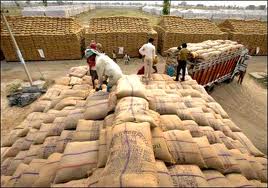
Food procurement and assured prices to farmers through the MSP regime is what has turned India food 'self-sufficient'.


Finance Minister P Chidambaram has called for bringing in private players to participate in foodgrain procurement. “The government is the largest and in many ways the only bulk buyer of cereal crops. The discovery of market prices is affected by minimum support price.” By opening to the private sector, the Finance Minister thinks procurement will improve as it will benefit both the consumers as well as the farmers.
This has serious implications for not only country’s food security but also will impinge upon food self-sufficiency so assiduously built over the past four decades.

For farmers, such a policy change will mean an end of an era where wherein they were getting a minimum assured price for at least wheat and paddy. Although the Commission for Costs and Prices (CACP) announces the minimum support price for nearly 24 crops every year, it is only in case of wheat and rice that farmers get the benefit of minimum support price since the Food Corporation of India (FCI) as well as some State agencies steps in to buy it from the markets. In others words, the minimum support price for wheat and rice becomes an assured price for farmers.

Mr Chidambaram gives an impression as if the procurement of wheat and rice by the government agencies crowds out the private players, who would have paid a better price to farmers. This is not true. In reality, the procurement system nowhere says that it is only the government agencies that have to buy foodgrains from the mandis. Private players too can come and make purchases from the mandis. Only when there are no buyers for wheat, for instance, at the procurement price of Rs 1350 per quintal that it becomes mandatory for the FCI to purchase the produce.

Every procurement season, some of the wheat and paddy is certainly purchased by the private players at a relatively higher price than the procurement price announced by the government. Bulk of the purchase is however made by FCI and State agencies. The stability in wheat and paddy prices is what has sustained farmers in the Green Revolution belt of Punjab, Haryana, western Uttar Pradesh all these years.

What Mr Chidambaram is therefore very cleverly suggesting is to dismantle the existing procurement system that will allow the private sector to make purchases at the prevailing market prices. If the private sector is so keen, I don’t understand why does it not buy wheat and rice from farmers in Bihar, eastern Uttar Pradesh, Odisha and West Bengal where the mandi network doesn’t exist? In any case, private players, including arhtiyas, dominate bulk buying of wheat and rice in all these States. Invariably, at all these places farmers have to resort to a distress sale getting not more than Rs 900 to Rs 1000 per quintal as the wheat price. Unless Mr Chidambaram wants Punjab and Haryana farmers to also go in for distress sale, I don’t understand his logic of price discovery.

In addition, if the private players are so keen to help the farmers as well as the consumers why can’t they demonstrate their willingness to do so in the remaining 22 crops for which there is no reliable procurement system. After all, pulses are an important part of the average Indian diet. Yet, its production is not picking up because there is no marketing system that provides an assured price to farmers. Farmers do not have the ability to bear the shocks of the volatility of the markets, and therefore opt to cultivate wheat and paddy offering an assured price. The private sector can easily provide the benefit of what it calls as price realisation offering a higher price to growers.

Take the case of sugarcane. Over the years, it has turned out to be the most important cash crop for farmers. This is primarily because of the State Advised price of cane, which the State government decides and which the sugar mills have to pay. Withdraw the State Advised price and I am sure many sugarcane farmers will be forced to commit suicide. And what about crops like potato and tomato? Don’t we see farmers throwing potato and tomato onto the streets at the time of a glut when prices fall? Why the private players can’t rescues farmers with a higher price at times of glut?

The point I am trying to make is left to private players farmers would be exploited to the hilt. This is exactly the reason why the government had constituted the Agricultural Prices Commission soon after Green Revolution was ushered in 1966. At the same time it set up the Food Corporation of India. Both these were excellent initiatives and what needs to be understood is that if the country has stopped food imports and turned food self-sufficient it is primarily for the role played by these two organisation in providing an assured price and an assured market to farmers. Any attempt to tinker with the procurement system therefore is wrought with grave implications for the farming population as well as the country’s food security.