Showing posts with label Green Revolution. Show all posts

What going wrong with Indian agriculture?


Reisernte in AssamReisernte in Assam (© picture-alliance/AP)


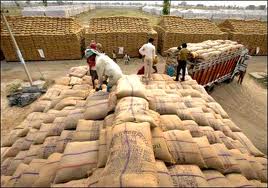
It's a paradox. With its grain silos bursting at the seams, and unable to store a massive surplus of wheat and rice, India is looking for every opportunity to export. After exporting 22 million tonnes of rice and wheat in the fiscal year 2013 (April 2012 to March 2013), India is expected to export another 18 million tonnes in 2013-14. In other words, India's food exports will touch a record 40 million tonnes in just two years. By the time the general elections are over in May 2014, another 31 million tonnes of wheat harvest is expected to be purchased by government agencies. This comes in the wake of a bountiful harvest expected this year – a record foodgrain production of over 263 million tonnes. 

Strangely, food exports are being encouraged at a time when close to 250 million Indians, one-fourth of the world's hungry population, somehow struggle to meet their basic food needs. It is primarily to address the growing food insecurity in a nation saddled with huge food reserves that the government has finally enacted the National Food Security Act 2013 making legal provisions for a monthly per capita entitlement of five kilogram of wheat, rice or millets at a highly subsidized price to those living below the poverty line. Even though this is not enough to meet the nutritional requirement of an average household, it will provide some relief to those living in absolute hunger. To meet the food distribution requirements under the new food security law, the government will annually require about 61 million tonnes of food reserves. The Act caters to 67 percent of the population or roughly 830 million people, including the destitute, the old and infirm, as well as the homeless and migrating populations. 

WTO objects

It isn't that India cannot produce enough food to feed its burgeoning population. But what is coming in the way is the international pressure that aims at limiting domestic production and opening the Indian market to cheaper food imports. At the Ministerial Conference of the World Trade Organisation (WTO) held at Bali in Indonesia in December 2013, the United States backed by the European Union had challenged the food security provisions. An agreement was reached wherein India accepted the "Peace Clause" for an interim period of four years. The clause originally provided exemption to those countries that used export subsidies for agriculture beyond the permissible limit. It had expired at the end of 2003, but is being reintroduced to ensure that India's subsidies are not challenged. 

At the heart of the problem is the increasing amount being spent on public stockholding of foodgrains and thereby the rise in administered prices for wheat and rice that is procured from small farmers every year. According to the WTO Agreement on Agriculture, the administered or subsidised price paid to farmers by the government cannot exceed the de minimis level of 10 percent of the total value of the annual production. India, however, has already exceeded the limit in case of rice where the procurement price has shot up to 24 percent from the cut-off period 1986 to 1988.

It is not the food subsidy bill that is actually under the radar, but in reality it is the procurement price system that India administers to its small farmers that is now on the chopping block. If India is forced to limit the rice procurement price at 10 percent of the total value of production, and similarly refrain from increasing the wheat procurement price in the years to come, it will spell a death knell for agriculture already reeling under a terrible distress. Procurement price cushions farmers against the distress price that markets extract at the time of harvest. 

According to the US-based Environment Working Group, America had paid a quarter of a trillion US Dollars (179,7 billion Euros) in subsidy support for agriculture between 1995 and 2009. In the 2014 Farm Bill, these subsidies have been further extended. It provides for nearly 1 trillion US Dollars (718,6 billion Euros) in support for agriculture in the next ten years, including 756 billion US-Dollars (543 billion Euros) for the food aid programmes administered under the Supplemental Nutrition Assistance Programme (SNAP). 

Agricultural subsidies results in massive dumping of foodgrains across the globe thereby dampening farm gate prices, and pushing farmers out of agriculture. In any case, 14 agricultural commodity exports organizations have written to the US Trade Representative lamenting the temporary relief accorded to India under the "Peace Clause" thereby dampening the US export opportunities. In India on the other hand, wheat and rice growers have merely received 9.4 billion US Dollars (6,8 billion Euros) as procurement price in 2012. 

Agrarian Crisis

The effort by WTO to reshape Indian agricultural policies is happening at a time when Indian agriculture itself is faced with a terrible agrarian crisis. What began to be called as Second Generation Environmental Impacts resulting from the intensively-farmed Green Revolution has now blown into a full grown crisis in agriculture sustainability. With soil fertility devastated, underground water table plummeting as a result of relentless water mining, environmental contamination from excessive use and abuse of chemical pesticides, the entire farming equation has gone wrong. 

With agriculture becoming unremunerative over the years, and with the farm incomes steadily declining, a majority of the farmers want to quit farming if given an alternative. A recent survey by the New Delhi based think-tank Centre for the Study of Developing Societies (CSDS) has shown that 76 percent farmers want to leave agriculture. This is because farming has becoming an economically unviable proposition. According to the National Sample Survey Organisation (NSSO), the average monthly income of a farming family in India stands at a paltry 2,115 Rupees (about 25 Euros). In other words, a majority of the farmers are somehow surviving below the official poverty line. Farmers as a class are certainly at the bottom of the pyramid. 

No wonder, Census 2011 has shown that on an average 2,300 people are quitting farming every day and migrating to the cities looking for a menial job. Ironically, the crisis in agriculture is happening at a time when the country's economy has been on a growth trajectory. In the past decade, India's annual GDP growth had been at an average of 7 percent. Even between 2005 and 2009 when the average rate of growth was 8.3 to 9 percent, a Planning Commission study shows that 140 million people had left agriculture. 

Normally those who abandon farming should be joining the manufacturing sector. But even in the manufacturing sector, 53 million jobs were lost. More recently, CRISIL, a global analytical company has shown in a study that since 2007, over 37 million Indian farmers had abandoned agriculture and migrated into the cities. But in the last two years – between 2012 and 2014 – when economic growth had remained sluggish, an estimated 15 million have returned back to the villages in the absence of job opportunities. 

With roughly 54 percent of the population involved directly and indirectly with farming, and with the share of agriculture in country's GDP dipping to 14 percent, all is not well on the farm front. This is also reflected in the serial death dance on the farm that continues unabated. As per the National Crime Records Bureau (NCRB), approximately 300,000 farmers have committed suicide in the past 17 years. Even in the frontline agricultural State of Punjab, the country's food bowl, two farmers on an average are taking the suicide route every day. Nearly 60 percent of the farmers are deep in debt. What is more shocking is that a majority of those who produce food for the country actually go to bed hungry. 

Green Revolution

Nearly half a century after the Green Revolution was launched in 1966 by then Prime Minister Indira Gandhi, India has emerged out of the throes of a "ship-to-mouth" existence when food aid would come directly from the ships into the hungry mouths. The quantum jump in food production over the years has turned India into a net agricultural exporter. But while the Green Revolution certainly helped the country take care of its food needs, it bypassed the small and marginal farmers. At the same time, while production increased manifold, hunger too grew. 

Technology alone did not turn the tables. It was essentially the two planks of a "famine-avoidance" strategy that sustained increased production. Setting up a Commission for Agricultural Costs and Prices (then Agricultural Prices Commission) ensured an assured minimum support price for the farmers thereby providing them with an incentive to produce more. At the same time, Food Corporation of India (FCI) was set up to mop up the surplus harvests flowing into the dedicated agricultural markets, which was used for public distribution among the needy across the country through a vast network of ration shops. 

Prior to the Green Revolution, and before the Agricultural Prices Commission was set up, farmers were free to sell their produce to anyone who offered them good prices. It was known to be an exploitative system wherein the trade squeezed the profit margin of farmers at the time of harvest. It was only when procurement prices were introduced that farmers got an assured price for their produce, and that is what encouraged them to produce more. Procurement prices help farmers realise a fair and better price for their produce. 

India's Green Revolution success story owes much to the administration of procurement prices. But the same procurement prices have now become the villain of the story. Pro-reform economists now call it as an "archaic provisions of a socialist era" and are seeking the removal of the Agricultural Produce Marketing Committee Act (APMC) that allows farmers to bring the produce to the designated mandis (markets) where the private trade is first allowed to make purchases. It's only when there are no private buyers left that the FCI or the State procurement agencies step in to lift whatever is available at the minimum support price or procurement price. 

It is therefore not only WTO that is asking India to restrict the reach of the procurement prices within the de minimis level. The Commission for Agricultural Costs and Prices itself is on the forefront asking the procurement system, built so assiduously over the decades, to be dismantled. The argument is that farmers should be left free to sell to whomsoever they want thereby encouraging better competition and thereby realize a higher price. Considering that only 30 percent of India's 600 million farmers have access to procurement prices, the markets should have helped the remaining 70 percent farmers to reap a bounty. But that did not happen. In fact, the agrarian crisis is the worst in those areas where markets operate freely. 

Take the case of paddy in Bihar, which is the only State to have repealed the APMC Act way back in 2006. It had therefore allowed farmers the freedom to sell their produce to whosoever they like. Against the procurement price of 1,310 Rupees (15,3 Euros) per quintal (100 kilogram) that Punjab farmers got this year, Bihar farmers have somehow managed to sell paddy at something around 800 to 900 Rupees (9,4 to 10,5 Euros) per quintal. This is nothing but a distress price, a classic example of ruthless exploitation by the private trade. If Punjab too is directed to remove the procurement system, Punjab farmers will go the Bihar way. 

Agriculture refugees

In a quest to move from Green Revolution to the Second Green Revolution, India is on fast track to bring agriculture under corporate control. Amending the existing laws on land acquisition, water resources, seed, fertilizer, pesticides and food processing, the government is in an overdrive to usher in contract farming and encourage organized retail. This is exactly as per the advise of the World Bank and the International Monetary Fund as well as the international financial institutes. 

The World Bank had in 1996 estimated that the number of people migrating from the rural to the urban areas in India by the year 2015 would be equal to twice the combined population of the United Kingdom, France and Germany, which is 200 million. So the World Bank had predicted that 400 million people would be moving out of rural areas in India. In the subsequent World Development Reports, especially 2008, the Bank had even suggested setting up of a vast network of training institutes where the young farmers could be trained to become industrial workers. It has also been pushing for land rentals in the rural areas enabling the industry to easily acquire farmlands. 

Although the exact estimates are not available, rural areas are on a boil as a result of the protests over land acquisitions. Foreign companies are also being allowed to get into joint collaborations for which large swaths of farmland is being made available. Industrial corridors, real estate projects, express highways, special economic zones are being aggressively pushed without ascertaining how much of farm land must be kept under cultivation for meeting the country's food security needs. 

The crisis therefore is two-fold. While the rural areas are being emptied, moving the population into the urban areas is leading to the collapse of the cities. It is expected that by 2035, roughly 50 percent of India's population will be urban based. Secondly, the population shift from rural areas along with prime farmland being diverted for non-agriculture purposes will create a food deficit thereby leading to an unforeseen crisis on the food security front. But somehow, the agrarian crisis as well as the economic growth paradigm does not pass through rural India. Nor is any political party before the elections 2014 deliberating on the consequences of the growth model sans a sustainable and economically viable agriculture. 

But what is crystal clear is that sooner than later, India will be heading back to the days of a "ship-to-mouth" existence. #

Source: Agriculture in 'terrible crisis.' http://www.bpb.de/internationales/asien/indien/190207/agriculture-in-terrible-crisis

In German: http://www.bpb.de/internationales/asien/indien/189174/landwirtschaft-in-der-krise


67 Years after Independence, Indian farmers have disappeared from the economic radar screen -- My interview


Indian farmers continue to toll against all odds. 
(pic from web) 


On the occasion of the 67th Independence, Aug 15, 2014, the Hindi magazine Yathawat interviewed me on the state of Indian agriculture. In this short and crisp interview, I was asked to track the historical backdrop and to look at the present and future agricultural policies and approaches.  

Q: When India got its Independence in 1947, how did its agriculture look like? 

India got its Independence in 1947 in the backdrop of Bengal Famine. The famine happened in 1943 taking a massive human toll. Some estimates point to 3 million people perishing in the famine. But Nobel laureate Amartya Sen’s work tells us that there was no shortfall in food production in 1943. It was only because the private trade had diverted the food that millions of people were left starving. In 1947, when India got Independence, agriculture was in a pathetic state, a fallout of the neglect and wanton destruction of agriculture during the days of the British Raj. With more than 80 per cent population engaged in subsistence farming, Independent India was a hungry nation.

Q: What prompted Prime Minister Lal Bahadur Shashtri to give the slogan of "Jai Jawan, Jai Kisan" in 1965? Was it a reflection of the grave crisis afflicting farmers and farming, and of course the threat India faced from across the borders. 

When Lal Bahadur Shashtri took over a Prime Minister in 1964 India was a food importing country. It depended on food imports from North America under the PL-480 scheme. Not many people know that 1965, the year when India went to war with Pakistan, was also a drought year. In 1965 India had imported 10 million tonnes of wheat under PL-480. Knowing how precarious the food situation was, and knowing the extent of prevailing hunger, Lal Bahadur Shashtri had urged the nation to fast for a day. I know many people who have continued to fast on Monday’s since then. It was primarily because Lal Bahadur Shashtri understood the role that soldiers and farmers play in maintaining national security thereby preserving national sovereignty that he gave the slogan ‘Jai Jawan Jai Kisan’

Q: Green Revolution came in the late 1970s. What led to that ..

For almost 20 years after Independence in 1947 India had remained a food importing country. In fact, after the 10 million tonnes food import in 1965, the next year 1966 also turned to be a drought year in which India imported 11 million tonnes of foodgrains. That was the biggest food import at that time in history. before that, it was not that the first Prime Minister Jawaharlal Nehru did not make any serious efforts to improve food production. He launched various community development programmes but could not achieve the desired results. On Aug 15, 1955 he had shared his frustration with the nation when he said from the rampart of Red Fort: “It is very humiliating for any country to import food. So everything else can wait but not agriculture.’

After the premature death of Prime Minister Lal Bahadur Shashtri in Jan 1966, Mrs Indira Gandhi took over. But before Shashtri died he had annoyed the then American President Lyndon Johnson when he had told an American journalist, in reply to a question, that the war in Vietnam “was an act of aggression’. This sentence had annoyed Johnson who had stopped food exports to India under what is known as ‘stop-go policy’. India was then in such a precarious situation that even the Food & Agriculture Organisation of the United Nations had to make an appeal to US to allow food exports to India. Food would come directly from the ship to the hungry mouths. India was then called as a country living in a ‘ship-to-mouth’ existence.

Mrs Indira Gandhi sowed the foundation of ‘Green Revolution’ in 1966 when she allowed the seeds of dwarf and high-yielding varieties of wheat from CIMMYT in Mexico. India imported 18,000 tonnes of wheat seed from Mexico, adapted them to Indian conditions, and as per an earlier demarcated programme, distributed these seed to farmers in Punjab and western Uttar Pradesh where irrigation was available. The first wheat harvest after cultivating high-yielding seeds in 1967 was five tonnes more than the previous. This was a record increase at that time and was termed ‘wheat revolution’ by Mrs Gandhi.

Q: Green Revolution increased production in wheat and rice. Besides high-yielding varieties, there must be something else too?

The quantum jump in the wheat production was followed by rice two years later. India received high-yielding varieties of rice from the International Rice Research Institute in Manila, in 1968. These rice varieties were adapted to the Indian conditions and distributed to farmers in Punjab, western Uttar Pradesh and also in Andhra Pradesh and Tamil Nadu. Rice also recorded an increase in productivity and production. The term ‘Green Revolution’ was later coined by an American scientist, William Gaud.

Green Revolution turned the country self-sufficient in wheat and rice, and by early 1970s India stopped importing food under PL-480.

Since the days of Green Revolution, Indian agriculture has grown manifold. There has been an all around development in crop production not only in wheat and rice but also in coarse cereals, maize, cotton, sugarcane etc. Improved technology was packaged well with right policy decisions. The setting up of Food Corporation of India and Agricultural Prices Commission in 1965-66 were the two major planks of what Dr M S Swaminathan calls as the ‘famine-avoidance’ strategy.

Q: How come after Green Revolution turned the corners, farmers are committing suicide on a large scale?

By the mid-1980s, the environmental impact of intensive farming systems that used chemical fertilizers, chemical pesticides and groundwater had begun to emerge. These are called the 2nd Generation Environmental Impacts. But instead of encouraging farmers to adopt sustainable practices to thwart the negative impact of intensive agriculture, farm scientists tried to address this by encouraging more Green Revolution. In other words they asked farmers to apply more chemicals. This deteriorated the natural resource base. At the same time, the policy support for agriculture declined. Reduction in public sector investment in agriculture, failure to encourage sustainable farming practices, and unremunerative prices for agricultural produce were among the factors that turned agriculture into a losing proposition. The damage was more pronounced in cash crops like cotton. Farm suicides began as a trickle around 1987 or so and since then have taken a toll of nearly 3 lakh farmers in the past 17 years.

Q: What is behind the terrible agrarian crisis that India faces? 

Farm suicides are the outcome of the continued neglect and apathy of the farm sector. Besides the policy makers, a significant role is also played by agriculture scientists and economists. They cannot simply absolve themselves from the terrible agrarian crisis that have prevailed for almost two decades now.

Q: Is it because India does not have a clear cut understanding and focus on how to prop up agriculture? Is it because of a wrong direction coming from international institutions? 

About 20 years after the Green Revolution began, and somewhere in the early 1990s, the global economic thinking shifted to shrinking agriculture and boosting industry. World Bank/IMF and the international financial institutions began to propose that economic growth can only take place when fewer people are left in agriculture. In 1996, the World Development Report of the World Bank suggested moving 400 million people, equally to twice the combined population of UK, France and Germany, from the rural to the urban areas in India in the next 20 years, by the year 2015.

Meanwhile, the emergence of World Trade Organisation in 1995, also shifted the focus to trade. The mainline economic thinking shifted to reducing support for agriculture and importing highly subsidized cheaper food from the developed countries. Subsequently, the World Bank and Multinational Corporations have been pushing for land acquisitions, contract farming, creation of super markets or in other words paving the way for corporate agriculture. In other words, the neglect of small scale agriculture is part of a design. It is part of a pre-planned economic strategy that is being imposed. 

In a country where 52 per cent of the 1.27 billion people are directly or indirectly engaged in agriculture, the thrust of the economic growth paradigm is to push farmers out of agriculture. Since the younger lot among farmer’s don’t know anything except farming, the World Bank had suggested a network of training schools across the country to train them to become industrial workers. That is being done. In other words, farmers have now become a burden on the country. The common thinking is the sooner the country is able to offload farmers,  the better it will be.

Q: Every year the government announces support for agriculture in its annual budgets. You think that is enough? 

In 2013-14, farmers produced a record harvest of 264.4 million tonnes of foodgrains. Production of oilseeds reached a record high of 34.5 million tonnes, a jump of 4.8 per cent. Maize production increased by 8.52 per cent to reach a level of 24.2 million tones. Pulses production reached an all-time high of 19.6 million tones, an increase of 7.10 per cent over the previous year. Cotton production too touched a record high.
With such record production, the nation should remain indebted to the virile and hardworking farmers. But last year, in 2013-14, when farm production recorded a quantum jump, agriculture received Rs 19,307-crore from the annual budget kitty, which is less than 1 per cent of the total budget outlay. This year, only Rs 22,652-crore has been provided for agriculture and cooperation departments. Again the outlay for agriculture remains less than 1 per cent of the total budget. In all fairness, the apathy towards agriculture continues.

Q: Is the neglect continuing? 

The neglect of agriculture has become more pronounced since economic liberalization was introduced in 1991. I recall the then Finance Minister Manmohan Singh famous budget speech when he showered all the bounties on industry and in the next paragraph said that agriculture remains the mainstay of the economy. But since agriculture is a State subject, he left it to the State Governments to provide the much need impetus to farming. But what he forgot to say was that industry too is a State subject and should have been left to the State governments. The bias therefore was clearly visible.

Although agriculture grew at an impressive rate of 4.1 per cent in the Eleventh Plan period (2007-8 and 2011-12) it received a dismal financial support of Rs 1 lakh crore. For a sector which directly and indirectly employs 60-crore people, Rs 1 lakh crore outlay for five years is simply peanuts. In the 12 Plan period (2012-13 to 2017-18) agriculture is projected to receive Rs 1.5 lakh crore. Compare this with the Rs 5.73 lakh crore tax exemptions showered on the industry in 2014-15 alone. Since 2004-05, Industry has received tax concessions (computed under ‘revenue foregone’ in the budget documents) to the tune of Rs 36.5-lakh crores or Rs 1,100 crore per day for the past 9 years. It’s therefore a matter of priorities. In fact, as I have been saying for long, farmers have disappeared from the economic radar screen.

Despite the neglect, the fact remains whatever India has been able to achieve in economic and military terms is primarily because of food self-sufficiency built so assiduously over the past five decades. But the tragedy is that the country is deliberately destroying the agricultural foundations, and pushing it back to the days of 'ship-to-mouth’ existence. Over the past few years, India is busy adopted the same economic policies that were existing at the time of Bengal Famine. #


The easy way to destroy India's food self-sufficiency: Open up procurement to private sector.


Food procurement and assured prices to farmers through the MSP regime is what has turned India food 'self-sufficient'.


Finance Minister P Chidambaram has called for bringing in private players to participate in foodgrain procurement. “The government is the largest and in many ways the only bulk buyer of cereal crops. The discovery of market prices is affected by minimum support price.” By opening to the private sector, the Finance Minister thinks procurement will improve as it will benefit both the consumers as well as the farmers.
This has serious implications for not only country’s food security but also will impinge upon food self-sufficiency so assiduously built over the past four decades.

For farmers, such a policy change will mean an end of an era where wherein they were getting a minimum assured price for at least wheat and paddy. Although the Commission for Costs and Prices (CACP) announces the minimum support price for nearly 24 crops every year, it is only in case of wheat and rice that farmers get the benefit of minimum support price since the Food Corporation of India (FCI) as well as some State agencies steps in to buy it from the markets. In others words, the minimum support price for wheat and rice becomes an assured price for farmers.

Mr Chidambaram gives an impression as if the procurement of wheat and rice by the government agencies crowds out the private players, who would have paid a better price to farmers. This is not true. In reality, the procurement system nowhere says that it is only the government agencies that have to buy foodgrains from the mandis. Private players too can come and make purchases from the mandis. Only when there are no buyers for wheat, for instance, at the procurement price of Rs 1350 per quintal that it becomes mandatory for the FCI to purchase the produce.

Every procurement season, some of the wheat and paddy is certainly purchased by the private players at a relatively higher price than the procurement price announced by the government. Bulk of the purchase is however made by FCI and State agencies. The stability in wheat and paddy prices is what has sustained farmers in the Green Revolution belt of Punjab, Haryana, western Uttar Pradesh all these years.

What Mr Chidambaram is therefore very cleverly suggesting is to dismantle the existing procurement system that will allow the private sector to make purchases at the prevailing market prices. If the private sector is so keen, I don’t understand why does it not buy wheat and rice from farmers in Bihar, eastern Uttar Pradesh, Odisha and West Bengal where the mandi network doesn’t exist? In any case, private players, including arhtiyas, dominate bulk buying of wheat and rice in all these States. Invariably, at all these places farmers have to resort to a distress sale getting not more than Rs 900 to Rs 1000 per quintal as the wheat price. Unless Mr Chidambaram wants Punjab and Haryana farmers to also go in for distress sale, I don’t understand his logic of price discovery.

In addition, if the private players are so keen to help the farmers as well as the consumers why can’t they demonstrate their willingness to do so in the remaining 22 crops for which there is no reliable procurement system. After all, pulses are an important part of the average Indian diet. Yet, its production is not picking up because there is no marketing system that provides an assured price to farmers. Farmers do not have the ability to bear the shocks of the volatility of the markets, and therefore opt to cultivate wheat and paddy offering an assured price. The private sector can easily provide the benefit of what it calls as price realisation offering a higher price to growers.

Take the case of sugarcane. Over the years, it has turned out to be the most important cash crop for farmers. This is primarily because of the State Advised price of cane, which the State government decides and which the sugar mills have to pay. Withdraw the State Advised price and I am sure many sugarcane farmers will be forced to commit suicide. And what about crops like potato and tomato? Don’t we see farmers throwing potato and tomato onto the streets at the time of a glut when prices fall? Why the private players can’t rescues farmers with a higher price at times of glut?

The point I am trying to make is left to private players farmers would be exploited to the hilt. This is exactly the reason why the government had constituted the Agricultural Prices Commission soon after Green Revolution was ushered in 1966. At the same time it set up the Food Corporation of India. Both these were excellent initiatives and what needs to be understood is that if the country has stopped food imports and turned food self-sufficient it is primarily for the role played by these two organisation in providing an assured price and an assured market to farmers. Any attempt to tinker with the procurement system therefore is wrought with grave implications for the farming population as well as the country’s food security. 

How to save Punjab Agriculture


For over 40 years now, ever since Green Revolution began, the nation has eulogised the Punjab farmer. Newspapers have reported time and again about the visible prosperity ushered in through intensive agriculture. Magazine articles have featured the opulent life style of prosperous Punjabi farmers. The story of the bygone era somehow remains transfixed in our memory, and that perhaps is the reason why policy makers, economists and scientists still continue to live in the past.   

For nearly two decades now, Punjab’s underbelly has been gradually caving in. Excessive use of chemical fertilisers have turned the verdant lands poisonous, water mining has dried the aquifers leading to the expansion of the desert, and chemical fertilisers and pesticides have played havoc with the environment and human health. With the input prices climbing year after year and the output prices remaining static, Punjab farmers became a victim of the same economic policies that projected them as country’s heroes. Agriculture has turned not only unsustainable but economically unviable.  

Over the years indebtedness began growing to phenomenal levels. A recent Punjab Agricultural Universityshows as many as 89 per cent of Punjab farm households are reeling under debt. The per farm family debt stands at a staggering Rs 1,78,934. In other words, for every hectare of land holding, the outstanding debt is Rs 50, 140. In my understanding, indebtedness has grown still higher in the last few years. One of the main reasons being the push for more sophisticated but unwanted farm machinery. Take the case of tractors. Once a symbol of prosperity, tractors have now turned into a symbol of suicides. With every second farm household owning a tractor, more out of prestige than necessity, the resulting indebtedness has grown.

Mainline agricultural scientists cannot think beyond costly equipments and chemicals. New equipments are being introduced with regular frequency. Even the World Bank supported ‘Conservation Agriculture’ which is more or less centred on zero tillage brings its own set of farm equipments. Farmers are being asked to purchase laser land leveller; zero till planters, including the second generation ‘happy seeds and ‘turbo seeders’; rotary disc drill used for intensive soil working and of course a range of costly herbicides. And before you realise the importance of these equipments, you find over 150 fabricators and entrepreneurs descending on your farm. All such innovations add to the costs of the farmer.

Farm incomes continue to dwindle. As per NSSO 2003-04 estimates, the average monthly income for a farm family in Punjabdoes not exceed Rs 3,400. No wonder, younger generation is refusing to take up farming as a profession.       

Increasing crop productivity and shifting to cash crops is the only solution that is being suggested to provide more income into the hands of farmers. Still struck up in the Jurassic age, some scientist-administrators have been seeking policy directions to remove small and marginal farmers, and hand over Punjab’s agriculture to agri-business. Already efforts have been made, without much success, to usher in corporate agriculture through the backdoor. For instance, ‘contract farming’ was one such approach although it is widely known that most of the private companies that entered into contracts have run away, leaving farmers in lurch. Some studies point to nearly 65 per cent of the farmers who went into ‘contracts’ with private companies saying they are so disillusioned that they would never like to burn their fingers again.

Still worse, the progressive farming techniques being displayed, and which form part of the crop diversification plan for Punjab, are all based on water guzzling crops (essentially hybrids and GM crops). Sugarcane farmers, who follow a system on cane bonding with the mills, actually are drawing 240 cm of water every year, which is two and a half times more than what wheat and rice requires on an average. Rose cultivation requires 212 inches of groundwater consumption in every acre. On an average, cash crops require five to ten times more water and three times more chemical fertilisers than what is used in wheat and rice.

What Punjab needs is a new model of agriculture based on the principles of natural resource regeneration. Instead of bringing in the industry-driven 2nd Green Revolution approach, which is an extension of the intensive-farming systems that has led to the present crisis, Punjab needs to take a leaf from the world’s biggest sustainable farming system being laid out in Andhra Pradesh. Within a span of six years, AP has brought in 40 lakh acres under no pesticides farming. It has set a target for increasing the acreage under sustainable farming to 100 lakh acres by 2013. Significantly, farm incomes have increased, environment has become much clean, pest attack has come down, and the health expenses too have come down drastically.

At a time when Punjab’s agriculture is at the cross-roads, it needs a radically different approach drawing from the lessons of its recent past. Here is a six-pronged strategy that can sow the seeds of revival of Punjab’s agriculture:

  • Set up State Farm Income Commission: Increasing farm incomes remains the top priority. Like all other sections of the society, farmers too should have a monthly take home package. Ironically, the minimum monthly income for a peon is Rs 15,000 where as farmers get only a fraction of this. Therefore, instead of providing him with more credit, which increases indebtedness, farmers too need assured monthly income. This cannot come from big retail (like Walmart/Tesco) which is wrongly believed to remove middlemen and thereby provide more income to farmers. Like in the US/Europe, farmers need direct income support.    
  • Introduce Non-Pesticides Management: To begin with, pesticides on rice need to be phased out under a time bound programme. The International Rice Research Institute (IRRI) in the Philippines has already accepted that ‘pesticides use on rice was a waste of time and effort”. Knowing this, the Department of Agriculture should be directed to work out an alternative farming system using biological options. Punjab needs to aggressively pursue the NPM farming systems being promoted under the National Rural Livelihood Mission by the Ministry of Rural Development. This will also impact positively the health mission that the State is grappling with. 
  • Restore Soil health and fertility: Over the years, Punjab soils have turned sick and the organic matter hovers around zero per cent. Indiscriminate use and abuse of nitrogen fertilisers has also created a huge nutrient imbalance. All efforts to induce balanced application of nutrients have failed to make any marked improvement. This must be supplemented by State-wide campaign to rejuvenate soils utilising the available biomass and the forgotten green technologies. It should be made mandatory for fertiliser companies to ensure green manuring, composting and use of panchkavya and jeev amrit in farming. Only a healthy soil can produce healthy food.    
  • Regenerate Groundwater: Considering the water crisis that looms large, Punjab must shift to farming systems that require less water. As a matter of principle, hybrid and GM crops (which require much more water) should be discouraged. Instead of pushing more farm equipments, effort should be directed to promote System of Rice Intensification (SRI), which does not require much standing water and also does away with heavy labour at the time of transplanting. Direct seeding of rice also saves a lot of water. In addition, water harvesting and revival of village ponds should be given incentives. Artificial regeneration of groundwater along borewells and wells too need adequate allocation.    
  • Research Priorities: Punjab Agricultural University (PAU), once the seat of Green Revolution, needs to undergo transformation in its research approach. So far crop varieties were being evolved looking into its fertiliser-response, photo-period insensitivity and the application of chemical pesticides. From inorganic crop breeding, research focus should now shift to organic breeding where varieties are developed in response to the availability of nutrients in organic form. These varieties have also to respond to climate change that stares ahead. Multiple cropping systems, incorporating dairy cattle, need adequate emphasis. Science must cater to the changing consumer needs rather than remain driven by industry interests.
  • Farm land Acquisition: No agricultural land, whether single-cropped or multi-cropped, should be diverted for non-farm purposes. Even in US, from where we increasingly borrow our economic policies, all efforts are to ensure that farmers do not sell off their lands for private use. US has brought in a Farmland and Grazing land Protection Programme that provides economic support to farmers for not diverting their land for non-agricultural use. In the 2008 Farm bill, US has allocated $ 743 million (approximately Rs 3,500 crores) to farmers over a five-year period 2008-2012 for conserving and protecting their farm lands. Budgetary allocation must be made for improving and conserving farm lands, and coupled with monthly income package; it would provide the right kind of incentive to make agriculture profitable. #

How Green Revolution Played Havoc With Mexican Agriculture

Mexico is the land of origin of the Green Revolution. It is here that the so called miracle seeds of dwarf wheat were first evolved. Norman Borlaug's wheat magic did cast a spell in far away India, which spread like a wild fire across the developing world. It literally sowed the seeds of what was later dubbed as the Green Revolution.

While the 2nd generation-environmental impacts of Green Revolution have played havoc with the natural resource base across continents, the destruction of the farm lands, and the plight of the dying farmers, is being hastily buried under the aggressive launch of the Second Green Revolution. To avoid the finger of suspicion pointing towards them, the international scientific community in collaboration with the agribusiness industry and the policy makers, are in a desperate hurry to create a smokescreen that hides the great tragedy.

Four decades after Green Revolution was launched, the world is still to come to grips with the devastation it wrought to the farm lands -- the fertile and verdant lands gasping for breath; chemical pesticides not only disrupting the insect equilibrium, but resulting in more savage pest attack besides contaminating the food chain; and the relentless mining of groundwater drying up the hemisphere. Intensive agriculture has already brought the world to a boiling point.

Added to the destruction of farm lands, the growing emphasis on corporatisation of agriculture which includes futures trading, free trade in agriculture and the strengthening of big box food retail has already brought the food chain into the hands of a few food giants/agribusiness companies. Farming communities wordwide have been marginalised in the process, and I am sure the day is not far away when farmers will disappear from the face of the Earth.

The extinction of the farm communities is actually a process that began more or less with the advent of Green Revolution. Those who promoted Green Revolution, it is now becoming clear, were not aware of the hidden design. The complete take over of agricultural research and education across the globe by the US land grant system came in handy to programme the scientific mindset. The USAID has to be admired the way it helped change the scientific brains to the virtues of the intensive farming systems as the only way forward.

Anyway, I came across this interesting insight into Mexican agriculture, which I feel I must draw your attention to. Jill Richardson, author of Recipe for America: Why Our Food System is Broken and What Can we do it to Fix it, travelled to 'see the Green Revolution first hand'. Here is her report.

The US Ploy to Promote Genetically Engineered Seeds and Pesticides to Poor Mexican Farmers Is Impoverishing Their Communities.
By Jill Richardson
http://bit.ly/9zY4gb